What Causes Sudden Water Leaks in Apartments and Brownstones
A water leak that appears out of nowhere is one of the most stressful things a building owner or tenant can face. In Hamilton Heights and across upper Manhattan, apartments and brownstones deal with a specific set of plumbing challenges that make sudden leaks more common than most people expect.
Understanding what causes these leaks can help you respond faster and avoid the kind of water damage that turns a small repair into a major renovation.
Why Older Buildings Are More Vulnerable
Hamilton Heights is full of pre-war brownstones and apartment buildings with plumbing systems that are decades old. Many of these buildings still have original galvanized steel or cast iron supply and drain lines running through the walls and floors.
Over time, these materials corrode from the inside out. The pipe walls thin, joints weaken, and eventually a small crack or pinhole becomes a sudden, visible leak. The failure often feels sudden, but the deterioration has been building for years.
Common Causes of Sudden Water Leaks
Most unexpected leaks in apartments and brownstones trace back to one of these root causes:
- Corroded or aging galvanized steel supply pipes that finally fail at a weak point
- Deteriorated pipe joints or fittings that separate under normal water pressure
- Frozen and burst pipes during New York winters, especially in exterior walls or unheated spaces
- Failed or cracked supply lines behind toilets, sinks, or washing machines
- Worn-out shutoff valves that begin leaking at the stem
- Clogged drain lines that cause water to back up and overflow through fixtures or floor drains
- Roof or parapet leaks in brownstones that travel down through the structure and appear as plumbing leaks
In multi-unit buildings, a leak in one apartment can also originate from a unit above. Water follows the path of least resistance, so the visible damage is not always where the problem started.
The Role of New York Winters
Cold weather is a serious factor in Hamilton Heights. When temperatures drop hard in January and February, pipes running through exterior walls, crawl spaces, or poorly insulated areas are at real risk of freezing.
When water freezes inside a pipe, it expands and can crack the pipe wall. The leak does not always appear immediately. Sometimes the pipe holds until temperatures rise and the ice thaws, releasing pressure and water all at once. This delayed failure is one reason freeze-related leaks catch people off guard.
Warning Signs to Watch For
Leaks rarely appear without some advance notice. Watch for these indicators before a small issue becomes a flood:
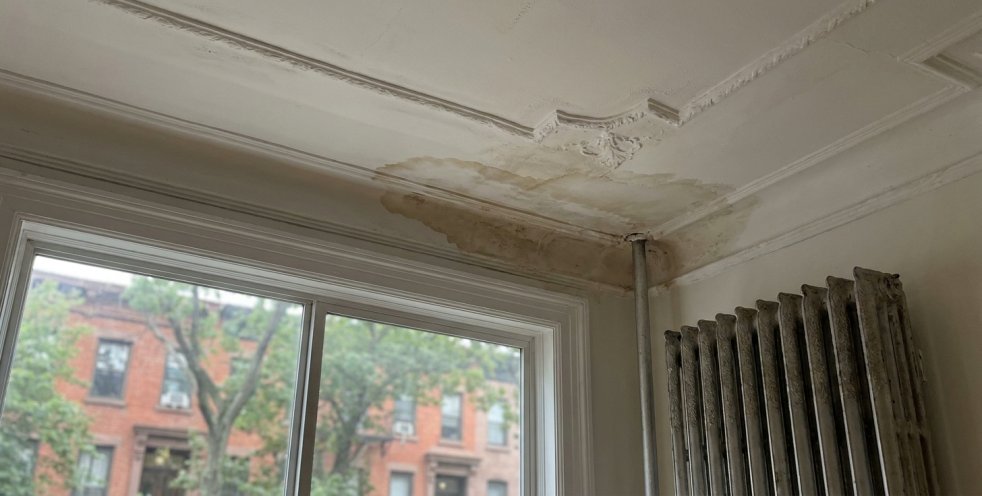
- Water stains or discoloration on walls, ceilings, or floors
- Peeling paint or bubbling plaster near plumbing fixtures or exterior walls
- A musty or damp smell in closets, under sinks, or in basement areas
- Unexplained increases in your water bill
- Low water pressure that develops gradually over time
- Rust-colored or discolored water coming from faucets
- The sound of dripping or running water when no fixtures are in use
Any one of these signs is worth investigating. In a brownstone or older apartment building, ignoring early warnings usually leads to more expensive repairs down the line.
Risks of Ignoring a Sudden Leak
Water damage moves fast. Even a slow leak behind a wall can saturate insulation, rot wood framing, and create conditions for mold growth within 24 to 48 hours. In a multi-unit building, that damage can spread to neighboring units and create liability issues for building owners.
Mold remediation in New York City is expensive and disruptive. Structural repairs to water-damaged framing or plaster in a pre-war brownstone can run significantly higher than the original plumbing fix would have cost. Early intervention is almost always the more affordable path.
What to Do When You Spot a Leak
If you discover a sudden water leak, take these steps right away:
- Locate the nearest shutoff valve and turn off the water supply to the affected fixture or area
- If the source is unclear or you cannot isolate it, shut off the main building supply
- Move belongings, electronics, and furniture away from the wet area
- Document the damage with photos before any cleanup
- Contact your building manager or super if you are a tenant in a multi-unit building
- Call a licensed plumber to assess the source and scope of the leak before attempting repairs
Do not assume the leak has stopped just because the visible water slows down. A partial blockage or temporary pressure drop can make a leak appear to stop while the underlying problem continues.
How Glenn's Plumbing Services Can Help
At Glenn's Plumbing Services, we work regularly in Hamilton Heights and the surrounding neighborhoods, handling leaks in pre-war brownstones, walk-up apartments, and larger residential buildings. We understand the age of these structures, the materials involved, and the building codes that apply to plumbing work in New York City.
Whether you are dealing with an active leak, noticing early warning signs, or just want a professional inspection of aging pipes, we can give you a clear picture of what is going on and what it will take to fix it properly.
Call (929) 657-0643 to schedule a leak inspection or get an estimate. Catching the problem early is always better than dealing with the damage later.

-Logo.wine.svg)


